

How to Break In a New Waist Trainer (Without Pain)
To break in a new waist trainer, wear it loosely fastened for about 1 to 2 hours a day during the first week, then gradually add time and a slightly snugger fit over the following weeks. This gentle "seasoning" process lets the garment mould to your body and your body adjust to the compression, so it ends up feeling supportive instead of stiff. A waist trainer should always feel snug, never painful, and never restrict your breathing.
If your brand-new trainer feels rigid, unforgiving, and almost impossible to hook closed on day one, that is completely normal. The fabric, boning, and hardware are designed to soften and conform with wear. Forcing a new trainer to its tightest setting on the first day is the fastest way to discomfort and the slowest way to results. Here is exactly how to do it the right way.
Why a New Waist Trainer Feels Stiff and Tight
 Shop: ASHANTE SCULPT WAIST TRAINER – HOOK →
A new waist trainer is built to hold its shape. The latex or compression fabric, the flexible boning, and the hook-and-eye closures all start out firm because they have never been worn. That firmness is a feature, not a flaw, but it does mean you cannot expect it to feel like a soft t-shirt straight out of the package.
Two things happen as you break it in. First, the garment slowly conforms to the unique curve of your torso. Second, your body adapts to the steady, even compression around your midsection. Rushing either side of that process is what leads to pinching, red marks, and the urge to give up entirely.
The Seasoning Process Explained
"Seasoning" is the term borrowed from corsetry for gently breaking in a waist trainer over time. The idea is simple: short, comfortable sessions at a loose fit, repeated daily, so both the garment and your body ease into the relationship.
The golden rule of seasoning is low and slow:
- Keep it loose. On your first wears, fasten the trainer so it is snug but you can still slide a few fingers under the top and bottom edges.
- Keep it short. Start with 1 to 2 hours per session and stop the moment anything feels genuinely uncomfortable.
- Be consistent. Daily, gentle wear seasons a trainer far better than occasional, aggressive wear.
Never crank a new trainer to its tightest hook on day one. With boned or steel-boned garments, over-tightening too early can warp the structure; with all garments, it simply hurts and teaches your body to dread wearing it.
A Simple First-Week Schedule
Use this as a flexible guide, not a strict rule. Always defer to what your own body is telling you.
- Days 1 to 3: Wear your trainer at a loose, snug-not-tight fit for 1 to 2 hours per day.
- Days 4 to 5: If days 1 to 3 felt comfortable, increase to 2 to 3 hours per day at the same loose fit.
- Days 6 to 7: Increase to around 3 to 4 hours per day. You can fasten it slightly more snugly once it has been on for 20 to 30 minutes and the fabric has warmed and relaxed.
A common, easy-to-remember version of this is the "2-2-2" method: a modest reduction, worn 2 hours a day, for about 2 weeks. By the end of a roughly two-week seasoning period, many people can comfortably build up to longer daily wear. The trainer is properly seasoned when it simply feels comfortable and moves with you.
Comfort Tips for the Break-In Period
Small habits make a big difference while your trainer is still firm:
- Warm it up first. Let the trainer sit against your body for the first 20 to 30 minutes before adjusting it tighter. Body heat naturally softens compression fabric.
- Wear a thin base layer. A seamless tank or liner under your trainer reduces friction, wicks sweat, and keeps the garment cleaner.
- Sit and move normally. Gentle movement helps the garment conform to your shape faster than sitting rigidly still.
- Watch for warning signs. Pinching, numbness, shortness of breath, sharp pain, or skin that stays red long after removal all mean: take it off and loosen the fit. These are never part of "breaking in."
- Hydrate and breathe. You should be able to take a full, comfortable breath at all times.
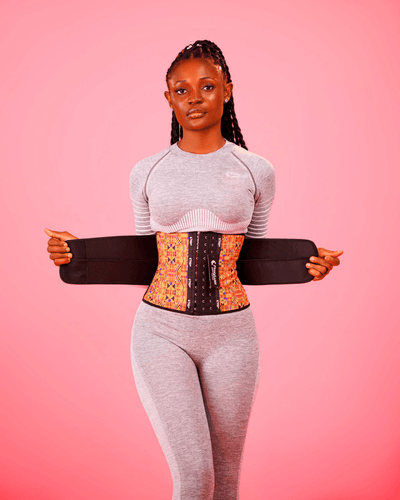
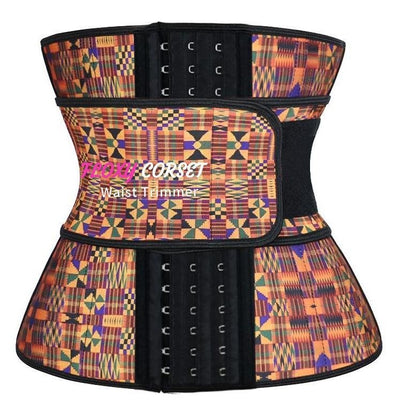
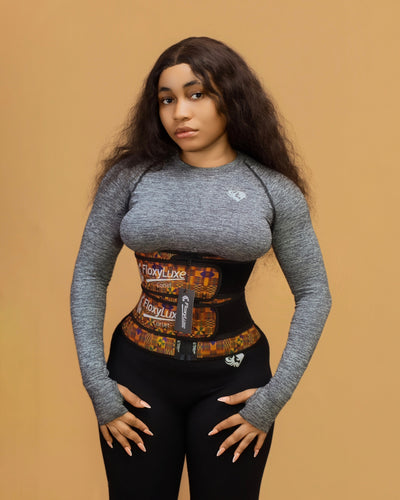
The feature trainer many of our customers start with is the Detachable Ashanté Patterned Waist Trainer. Its multi-row hook closure is helpful during seasoning because you can begin on the loosest row and step inward over the weeks as your body adjusts.
!Detachable Ashanté patterned waist trainer with adjustable hook closure
Sizing, Snugness, and Extenders
Most break-in struggles are really sizing struggles. If a trainer is genuinely too small, no amount of seasoning will make it comfortable.
To check your size, measure the narrowest part of your waist with a soft tape that is level and snug but not pulled tight. If you fall between two sizes, size up for the break-in period. Beginners generally do best with a trainer that closes around the loosest setting at first, leaving room to tighten inward over time.
How snug is right? You want firm, even support that you are aware of but can comfortably forget about. A good test: you can take a full breath, sit, and move without pain. If the garment feels like it is squeezing the air out of you, it is too tight, full stop.
If your new trainer's outermost hooks feel like too big a jump from your starting measurement, a waist trainer extension adds extra room at the closure so you can begin truly loose and reduce gradually. It is one of the simplest ways to make the first week genuinely comfortable, and it is useful again later for layering over base garments or accommodating day-to-day changes.
When you are ready to add to your rotation, browse the full waist trainer collection to find styles in the right length and closure type for your torso.
A Note on Safety
Waist training is meant to feel supportive, never harmful. A waist trainer should never cause pain, numbness, or difficulty breathing. If you are pregnant, recently postpartum, recovering from surgery, or have any medical condition affecting your abdomen, ribs, or circulation, talk to your doctor before waist training. Stop wearing your trainer and seek advice if you experience persistent pain, skin irritation, or any concerning symptoms. Listening to your body is the most important rule of all.
Frequently Asked Questions
How long does it take to break in a waist trainer?
Most people need around one to two weeks of gentle, daily seasoning before a new trainer feels comfortable. The exact timing depends on the garment and how consistently you wear it during the break-in period.
How tight should a new waist trainer be?
Snug, never painful. On your first wears you should be able to slide a few fingers under the top and bottom edges, and you should always be able to take a full, comfortable breath.
Can I wear a new waist trainer all day right away?
No. Start with just 1 to 2 hours a day and build up gradually. Wearing a brand-new, un-seasoned trainer for long stretches risks discomfort, skin irritation, and damage to the garment's structure.
What if my waist trainer is too tight even on the loosest setting?
That usually means you need a larger size. You can also use a waist trainer extension to add room at the closure so you can start at a comfortable, loose fit.
Is it normal for a new waist trainer to feel stiff?
Yes. New fabric, boning, and hardware are firm by design and soften with wear. Gentle, consistent seasoning is what makes the trainer mould to your body and feel comfortable over time.