

Waist Trainer Size Guide: How to Measure & Choose
To find your waist trainer size, wrap a soft tape measure around the narrowest part of your natural waist — usually about an inch above your belly button — keeping the tape level and snug but not pulling tight. Then match that number to the size chart on the specific waist trainer you want, since sizing varies by style and brand. If your measurement falls between two sizes, most people size up for comfort, especially for a first waist trainer.
That's the quick answer. Below, we walk through exactly where and how to measure, how to read a size chart, what to do when you're between sizes, the most common sizing mistakes, and how to check that your fit is snug rather than painful.
How to Measure for a Waist Trainer
 Shop: Floxyluxe Body Measuring Tape →
The single most important step is taking an accurate waist measurement. Guessing your size — or relying on the dress or jeans size you usually buy — is the number one reason waist trainers fit poorly. Clothing sizes aren't standardised, but a tape-measure number is objective.
What You'll Need
You only need one thing: a flexible, soft measuring tape, the kind used for sewing or body measurements. Avoid a rigid metal builder's tape, which won't curve around your body and gives inaccurate readings. If you don't own one, our FloxyLuxe body measuring tape is designed for exactly this and makes self-measuring far easier.
Where to Measure on Your Body
Your natural waist is the narrowest part of your torso, typically sitting roughly an inch above your belly button and below your rib cage. This is not the same as where your jeans sit — your natural waist is usually higher. To find it, stand up straight and bend gently to one side; the point where your body creases is close to your natural waist.
Some waist trainers also reference an upper-belly or lower-belly measurement, depending on how long the garment is and how much of your torso it covers. Always read the product's own instructions, because the measurement point that matters can differ between a short waistband and a full longline shaper.
Measuring Step by Step
Follow these steps for a reliable measurement:
- Strip down to thin clothing or bare skin. Measuring over a thick jumper or bulky layers will add inches and push you toward a size that's too big.
- Stand tall and relaxed. Keep a natural posture, breathe normally, and don't suck in your stomach. You want your everyday resting measurement, not a held-breath number.
- Find your natural waist — the narrowest point, about an inch above the navel.
- Wrap the tape around that point, keeping it parallel to the floor all the way around. Check in a mirror that it isn't riding up at the back.
- Keep it snug, not tight. The tape should sit flat against your skin without digging in or leaving a mark. You should be able to slip a finger under it.
- Read the number where the tape meets the zero end, and write it down. Note whether you're reading inches or centimetres.
- Measure twice. Take the reading two or three times and use the consistent number. If your readings vary a lot, your tape is probably too loose or too tight.
Record any additional measurements the product asks for — such as upper belly, lower belly, or torso length — so you have everything ready when you check the chart.
How to Read a Waist Trainer Size Chart
Once you have your measurement, the next step is matching it to a size chart. Here's the key principle: always use the size chart for the exact waist trainer you're buying. Sizing is not universal. A size "M" in one style may correspond to a different waist range than an "M" in another, because materials, compression levels, and cuts vary.
When you open a product's size chart, look for these things:
- The measurement it's based on. Most charts map your natural waist to a size. Compare like with like — your waist number against the waist column, not a hip or bust column.
- The unit. Check whether the chart is in inches or centimetres and use the same unit for your measurement. Mixing the two is a common, avoidable error.
- The range per size. Each size usually covers a span of measurements. Find the row your number falls inside.
- Any fit notes. Guidance like "size up if between sizes" reflects how that specific garment is designed to fit.
You can browse styles and their individual charts across our waist trainer collection — each product page lists its own sizing so you can match your measurement to the right garment.
What to Do If You're Between Sizes
It's common for your measurement to land between two sizes, or right on a boundary. Here's how to decide:
- For your first waist trainer, size up. A slightly looser fit is more comfortable while you get used to the feel, and you can always adjust closures or layering. A too-small first trainer often ends up unworn because it's uncomfortable.
- For firmer shaping with experience, some people who have worn trainers before choose the smaller size for a tighter silhouette — but only if they're confident the fit will still be comfortable, not painful.
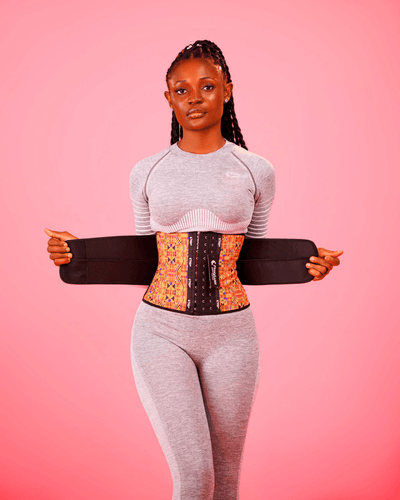
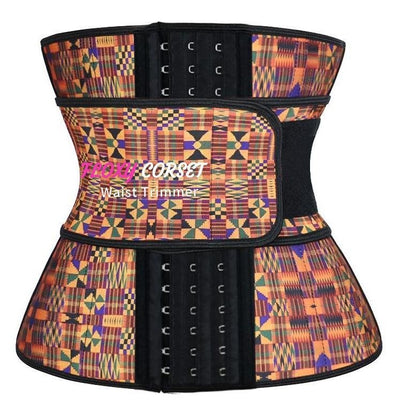
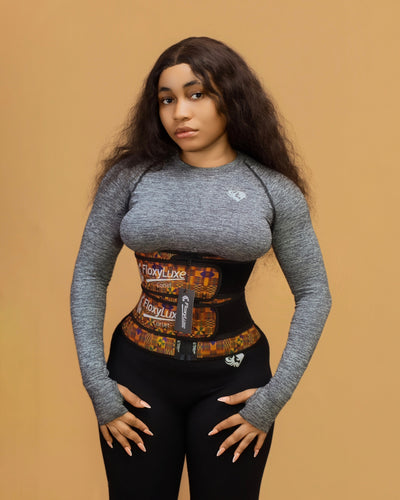
- Consider adjustability. Styles with multiple hook-and-eye rows, like the detachable Ashante patterned waist trainer hook, give you room to fine-tune the fit as your body settles or changes, which makes a between-sizes decision lower-stakes.
- Check the product's own advice. If the size chart says to round up or down at boundaries, follow it — that guidance is specific to how the garment is built.
When in genuine doubt, comfort wins. A waist trainer that's too tight is the most common reason people stop wearing one altogether.
Common Waist Trainer Sizing Mistakes
Avoid these frequent errors and you'll get the fit right far more often:
- Buying by clothing size. Your dress, jeans, or top size is not a reliable guide. Measure with a tape every time.
- Measuring in the wrong place. Measuring where your trousers sit, rather than at your natural waist, throws the whole result off.
- Pulling the tape too tight. Cinching the tape to get a smaller number only guarantees a garment that's painfully tight.
- Measuring over thick clothing. This inflates your measurement and leads to a trainer that's too loose to shape effectively.
- Sucking in or holding your breath. This gives an artificially small number you can't sustain while wearing the trainer.
- Assuming sizes carry across styles. A size that fit one trainer may not fit another — always recheck the chart.
- Ignoring length and torso fit. A trainer can match your waist number yet still ride up or dig into your ribs or hips if the length isn't right for your torso. Check length guidance where it's provided.
How to Check Your Fit: Snug, Not Painful
Once your waist trainer arrives, do a fit check before committing to wearing it for longer stretches. The goal is snug, supportive, and comfortable — never painful.
A correctly fitting waist trainer should:
- Feel firm and supportive around your midsection without sharp pinching.
- Let you breathe normally and take a full, comfortable breath.
- Allow you to sit and move without the garment digging into your ribs, hips, or stomach.
- Leave no broken skin, intense pressure points, numbness, or pins-and-needles tingling.
A waist trainer is fitting too tightly if you can't breathe comfortably, you feel sharp pain, your skin develops deep red marks or welts, you feel light-headed, or you experience any numbness or tingling. If any of these happen, take it off and try a looser closure or a larger size.
If you have any existing health concerns — for example issues affecting your breathing, digestion, circulation, ribs, back, or if you are pregnant or recently postpartum — talk to a doctor or qualified healthcare professional before wearing a waist trainer. This guide covers fit and sizing only; it is not medical advice, and a waist trainer is not a weight-loss tool.
Adjusting Your Fit Over Time
Your fit may change over the weeks you wear a trainer, and that's normal. Many styles include several rows of hook-and-eye closures so you can tighten or loosen as needed. Start on the loosest comfortable setting, especially when the garment is new, and move to a tighter row only when it feels comfortable — never force it.
Bodies change over time, so re-measure your natural waist periodically rather than assuming your size is fixed. If a trainer that once fit becomes consistently uncomfortable or no longer sits where it should, re-measure and reconsider your size. Comfort should always be the deciding factor.
Frequently Asked Questions
How do I know what waist trainer size I am?
Measure the narrowest part of your natural waist (about an inch above your belly button) with a soft tape measure, keeping it level and snug but not tight. Then match that number to the size chart on the specific waist trainer you're buying — sizing varies by style, so always use the product's own chart.
Where exactly do I measure for a waist trainer?
At your natural waist — the narrowest part of your torso, usually around an inch above the navel and below your rib cage. This is typically higher than where your jeans sit. Some longer styles also ask for an upper- or lower-belly measurement, so check the product's instructions.
Should I size up or down in a waist trainer?
If you're between sizes, sizing up is usually the safer choice, especially for your first trainer, because comfort matters more than a tighter cinch. Some experienced wearers size down for firmer shaping, but only if the fit stays comfortable. Always follow the product's own size-chart guidance.
How tight should a waist trainer be?
Snug and supportive, but never painful. You should be able to breathe normally, sit, and move comfortably. If you feel sharp pain, can't breathe easily, or notice numbness, tingling, or deep skin marks, it's too tight — loosen it or choose a larger size.
Can I use my clothing size to pick a waist trainer?
No. Clothing sizes aren't standardised and don't reliably translate to waist trainer sizing. Always measure your natural waist with a tape and use that number against the product's size chart for an accurate fit.
Ready to find your fit? Take your measurement, then browse our waist trainer collection and check each style's size chart. For more sizing and styling tips, explore the FloxyLuxe Impulse blog. This article is for general guidance only and is not medical advice — consult a healthcare professional with any health concerns.